







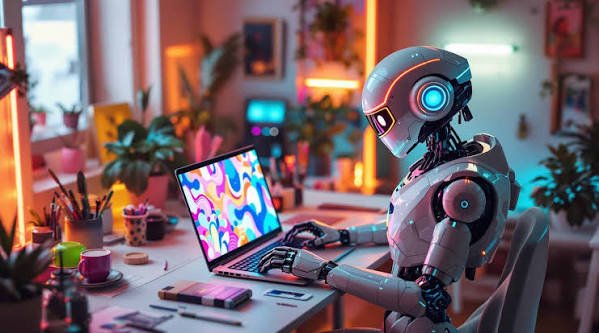
Artificial Intelligence has transitioned from a futuristic concept into an everyday creative power tool. Among its most dramatic breakthroughs is AI image generation—the ability to turn plain language text descriptions (prompts) into high-resolution artwork, photo-realistic imagery, and complex visual concepts in a matter of seconds. Platforms like Midjourney, OpenAI’s DALL-E, Stable Diffusion, and Adobe Firefly have democratized digital art, allowing anyone with an internet connection to bring their imaginations to life.
Understanding how AI image generation works, its impact across industries, and the ethical questions surrounding it provides a clear window into the future of human creativity.
1. How AI Image Generation Works
At the heart of modern AI image generators are advanced machine learning models, primarily Diffusion Models and Generative Adversarial Networks (GANs). These systems do not “search” the internet to collage existing photos together; instead, they synthesize brand-new images from scratch based on vast mathematical understandings of visual data.
The core process relies on three steps:
- Training on Datasets: AI models analyze billions of images paired with descriptive text captions. Through this, the model learns what concepts like “cat,” “gothic architecture,” “watercolor,” or “cinematic lighting” actually look like.
- Understanding Text Prompts: Natural Language Processing (NLP) interprets the user’s input, breaking down key subjects, artistic styles, color palettes, camera angles, and emotional moods.
- The Denoising Process: Diffusion models begin with a canvas of random visual “noise” (pixels resembling TV static). Step by step, the algorithm removes the noise, shaping the pixels into a clear, cohesive image that matches the prompt’s request.
2. Practical Applications Across Industries
AI image generation is no longer just a fun internet gimmick; it is rapidly becoming an essential component of professional workflows in various creative fields:
- Graphic Design & Advertising: Marketers can rapidly generate ad concept variants, social media banners, and campaign mood boards without waiting days for stock photos or initial drafts.
- Entertainment & Game Design: Concept artists use AI to quickly visualize characters, alien environments, weapons, and storyboard scenes during early pre-production stages.
- E-Commerce & Fashion: Brands leverage generative tools to create virtual photoshoots, dynamic product backgrounds, and mockups without expensive studio setups.
- Architecture & Interior Design: Designers feed floor plans and text prompts into AI tools to generate realistic 3D interior renderings and architectural facades for client presentations.
3. How to Master AI Prompt Engineering
To get high-quality outputs from AI image generators, users rely on prompt engineering—the art of structuring instructions effectively. A well-crafted prompt typically includes five core components:
- Subject: What or who is the main focus? (e.g., A cybernetic owl)
- Action/Context: What is happening? (e.g., perched on a neon-lit rooftop)
- Medium/Style: What artistic medium should it mimic? (e.g., oil painting, 35mm film photography, 3D render)
- Lighting & Atmosphere: What is the mood? (e.g., golden hour, moody fog, volumetric rays)
- Technical Details: Specific parameters (e.g., 8K resolution, depth of field, wide-angle lens).
Example Prompt: "A vintage 35mm photograph of an astronaut drinking coffee on a rainy street in Tokyo, cinematic lighting, shallow depth of field, 8k resolution."
4. Ethical Challenges and Controversies
Despite its immense popularity, the rise of AI image generation has sparked intense debate regarding copyright, authenticity, and ethics:
- Artist Rights & Copyright: Many AI models were trained on millions of copyrighted artworks scraped from the internet without explicit artist consent. This has led to ongoing lawsuits and demands for fair compensation and opt-out mechanisms for human creators.
- Misinformation and Deepfakes: The ability to generate hyper-realistic photos of public figures or real-world events makes it easier to spread fake news, requiring platforms to implement strict watermarking and safety guardrails.
- Job Displacement: Concerns persist that entry-level roles in illustration, stock photography, and graphic design could be reduced as automation increases efficiency.
5. The Future: Human-AI Collaboration
Rather than replacing human artists, the consensus among industry experts is that AI image generation will serve as a powerful collaborative tool. Emerging features allow artists to paint over specific sections of an image (inpainting), expand a canvas beyond its original borders (outpainting), or control exact character poses using sketch-based inputs.
As these tools mature, the value will remain centered on human ideation, curation, and taste. AI can generate thousands of images in minutes, but knowing what to create and selecting the piece that resonates emotionally with an audience still requires a human touch.
Conclusion
AI image generation marks one of the most transformative leaps in the history of visual communication. By turning language into imagery, it has unlocked unprecedented speed for professionals and lowered the barrier to entry for aspiring creators. As technology, law, and ethics continue to align, generative AI will remain a cornerstone of digital expression, redefining how we visualize ideas forever.